Roxane Gay continues to unearth a lot of the stereotypes and generalizations that we continue to see in the media without even realizing it. These go beyond just affecting women - although almost every single one can be applied to women - as Gay shows how racial prejudice can affect the way a character is described in a book or the way they are portrayed in movies. Gay uses films, books, and TV shows, recent and not so recent, to explore the way women are depicted in the media and how it affects each one of us.
Her use of evidence connecting directly to books or films is a double-edged sword: it helps make connections clear for readers who are already familiar with the piece, but if a reader has not heard of, read, or seen the item at hand, the connections made are a stretch and can be difficult to understand. Gay tries to circumvent this by explaining each piece of media she talks about in her essays, but at times it can be hard to keep up with new topic after new topic.
In describing reality TV, Gay describes some of the more popular shows - Real Housewives of Beverly Hills, Sister Wives, and Bad Girls Club - and uses their tactics of skewing reality to show how women are manipulated to be perceived in a certain way on these shows, often to their detriment. These connections are powerful, because although it is generally accepted that reality TV is not at all reality, not many people take time to point out the exact flaws that make this form of television so deceitful. Gay also turns this around, showing how this form of 'reality' may actually be realer than we think. She writes, "What may be most terrifying is just how real reality televisaion is, after all...perhaps we watch these shows because...we see, more than anything, the plainest reflections of ourselves, garishly exposed but unfettered" (81). This powerful ending line concludes the essay, but also leaves readers with something to think about long after the essay has been read.
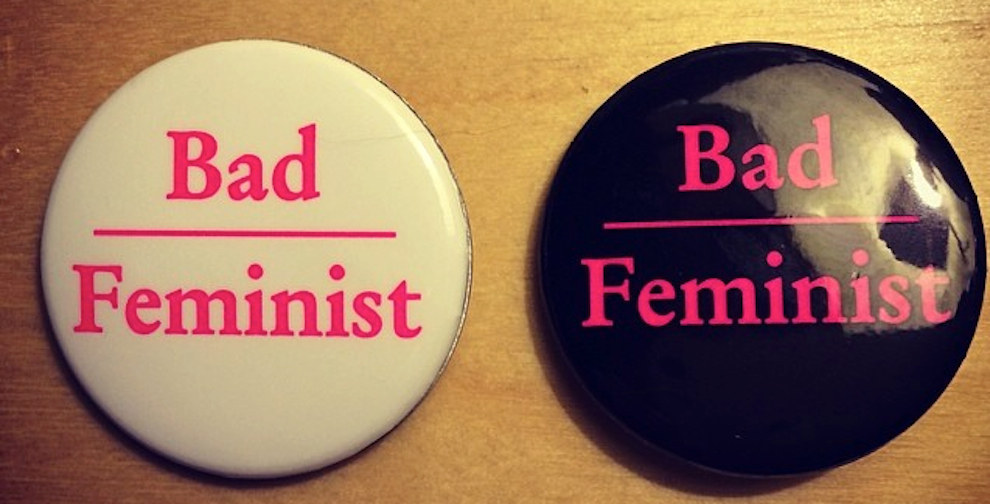
Gay's use of powerful ending lines is something I admire and want to try to continue using in my own writing. She extends the argument, instead of simply repeating what she has said over and over many times throughout each of her essays. I thoroughly enjoyed reading the essays within Bad Feminist and hope to use some of the rhetorical techniques Gay uses in my own writing. I also hope that I can continue being a bad feminist, learning along the way from my mistakes.
Sunday, January 22, 2017
Monday, January 16, 2017
TOW #15: "Will Racism End When Old Bigots Die?"
Will Racism End When Old Bigots Die? is an article from NPR that attempts to address the age-old question: just how is racism passed down from generation to generation, and is there any way to prevent the spread of racist beliefs? Is it getting better, or staying the same, as the millennial generation grows into adults? The article was published in NPR's Code Switch section, which deals with the many layers behind racial issues facing America today. Leah Donnella is a regular contributor to this section, and works as a news assistant and blogger.
The article starts off with a vignette of Shelly Fields, a 46-year-old white woman with biracial children. This showcase of Fields' situation is rhetorically effective, as it paints a diverse portrait of America -- one most readers can testify to -- right off the bat, to put things in perspective and also bring evidence from someone in a unique situation as Fields is. The article also accounts for her daughter's perspective, showing both sides of the story.
The use of the famous quotation from Martin Luther King, Jr., "I have a dream that my four little children will one day live in a nation where they will not be judged by the color of their skin but by the content of their character", is especially effective in pointing out the recurring theme for many parents who believe their children will grow up in a less racist world. Donnella also cites figures like Thomas Jefferson and Oprah Winfrey to show the prevalence of this argument in both ancient and modern history. This proves to be a recurring theme throughout the article: the belief that parents hold that 'things will get better' for their children.
Public polling data is also utilized effectively in the article, citing surveys done asking readers the question: Will racism fade away when old bigots die? Though the sample size was limited to about 120, a shocking two-thirds said they did not think that the next generation would usher out racism. Nearly the same number went on to say that they thought their answer would differ from their parents and grandparents. The anecdotes provided from families further this evidence, and serve as more 'scientific' proof of the disparity between parents and their children.
The article concluded that although the viewpoints of parents and their children differ extremely, when it comes down to it, many answer similarly when asked about racism and the future. Personal experiences and situations factor heavily into that equation, which is why the use of both anecdotal evidence and more scientific data is rhetorically effective for this article.
The article starts off with a vignette of Shelly Fields, a 46-year-old white woman with biracial children. This showcase of Fields' situation is rhetorically effective, as it paints a diverse portrait of America -- one most readers can testify to -- right off the bat, to put things in perspective and also bring evidence from someone in a unique situation as Fields is. The article also accounts for her daughter's perspective, showing both sides of the story.
The use of the famous quotation from Martin Luther King, Jr., "I have a dream that my four little children will one day live in a nation where they will not be judged by the color of their skin but by the content of their character", is especially effective in pointing out the recurring theme for many parents who believe their children will grow up in a less racist world. Donnella also cites figures like Thomas Jefferson and Oprah Winfrey to show the prevalence of this argument in both ancient and modern history. This proves to be a recurring theme throughout the article: the belief that parents hold that 'things will get better' for their children.
Public polling data is also utilized effectively in the article, citing surveys done asking readers the question: Will racism fade away when old bigots die? Though the sample size was limited to about 120, a shocking two-thirds said they did not think that the next generation would usher out racism. Nearly the same number went on to say that they thought their answer would differ from their parents and grandparents. The anecdotes provided from families further this evidence, and serve as more 'scientific' proof of the disparity between parents and their children.
The article concluded that although the viewpoints of parents and their children differ extremely, when it comes down to it, many answer similarly when asked about racism and the future. Personal experiences and situations factor heavily into that equation, which is why the use of both anecdotal evidence and more scientific data is rhetorically effective for this article.
Sunday, January 8, 2017
TOW #14: "Bad Feminist" (IRB)
Through reading Bad Feminist, I've learned a lot about several topics: what constitutes 'feminism', how media representation of women affects real-life stereotypes, and even how to master the art of the Scrabble tournament. I've also learned a lot about writing, through the ways author Roxane Gay is able to . Throughout the collection in various essays, Gay provides humorous anecdotes to help familiarize her audience with the subjects she writes about.
Feminism can be a big and scary topic for newcomers, and even those who consider themselves well-versed on the subject. With so many intersections in race, sexuality, class, and identity, it is hard to know where to begin. Gay acknowledges this with her statements in the introduction, alluding to the book's title as she says "I embrace the label of bad feminist because I am human. I am messy. I'm not trying to be an example. I am not trying to be perfect...I am just trying to support what I believe in." This outright statement showing not only Gay's vulnerability but also her drive to keep trying helps let readers know that being a bad feminist isn't really that bad after all.
After this short introduction, Gay jumps right into an anecdotal retelling of her life growing up: from seeing impoverished families in Haiti at seven to her experiences in relationships from nineteen on. From these stories, Gay is able to show just how many different things can intersect to create a unique person: molded from unique privileges and disadvantages, all based on one's life experience. Gay also calls readers out directly, saying, "If you are reading this essay, you have some kind of privilege. It may be hard to hear that, I know, but if you cannot recognize your privilege, you have a lot of work to do." This truth, spoken directly to her audience, lets readers know that feminism is, at times, about recognizing your own privilege based on the many identities you hold.
Bad Feminist is a book about making mistakes and owning up to them, and Gay shows this not only in the title but also in the essays within. She shows her personal failures, and times in her life where she wished she'd spoken up or done a better job of finding her own voice. However, it's not all sob stories. Gay includes stories like these to inspire both herself and readers to do better as a feminist and simply a human being. She shows us that it's okay to make mistakes, and that we, too, can be bad feminists.
Feminism can be a big and scary topic for newcomers, and even those who consider themselves well-versed on the subject. With so many intersections in race, sexuality, class, and identity, it is hard to know where to begin. Gay acknowledges this with her statements in the introduction, alluding to the book's title as she says "I embrace the label of bad feminist because I am human. I am messy. I'm not trying to be an example. I am not trying to be perfect...I am just trying to support what I believe in." This outright statement showing not only Gay's vulnerability but also her drive to keep trying helps let readers know that being a bad feminist isn't really that bad after all.
After this short introduction, Gay jumps right into an anecdotal retelling of her life growing up: from seeing impoverished families in Haiti at seven to her experiences in relationships from nineteen on. From these stories, Gay is able to show just how many different things can intersect to create a unique person: molded from unique privileges and disadvantages, all based on one's life experience. Gay also calls readers out directly, saying, "If you are reading this essay, you have some kind of privilege. It may be hard to hear that, I know, but if you cannot recognize your privilege, you have a lot of work to do." This truth, spoken directly to her audience, lets readers know that feminism is, at times, about recognizing your own privilege based on the many identities you hold.
Bad Feminist is a book about making mistakes and owning up to them, and Gay shows this not only in the title but also in the essays within. She shows her personal failures, and times in her life where she wished she'd spoken up or done a better job of finding her own voice. However, it's not all sob stories. Gay includes stories like these to inspire both herself and readers to do better as a feminist and simply a human being. She shows us that it's okay to make mistakes, and that we, too, can be bad feminists.
Sunday, December 18, 2016
TOW #13: "Donald Trump is Gaslighting America"
Teen Vogue has been typically thought of as a magazine with little substance other than fashion tips and superficial beauty regimens advertised toward young girls. This isn't surprising -- typically, any publication targeting teenage girls is written off as lacking depth or being unimportant, correlating with how the world as a whole tends to view this age group. However, Teen Vogue has consistently proven their merit in the past few years, with intelligent, well-written articles with topics ranging from social to political to cultural issues. Through articles like these, the magazine is taking the wide platform and influence they have with young girls and using it for good, to create a more educated and well-versed generation of girls.
One of the recent articles that has received a lot of attention from mainstream media is an Op-Ed piece entitled "Donald Trump is Gaslighting America", written by editor Lauren Duca. It is articles like this one that is what the magazine has come to be known for in recent years, much to mainstream media's surprise. With such a racially and socially diverse reader group, it makes sense that the kinds of articles the magazine publishes align with the more liberal-leaning views of the younger generation.
This article in particular describes the effects of Donald Trump's manipulative tactics by laying out the term "gas lighting" for its readers, describing the origin and meaning of the term. "Gas lighting", the article says, "is to psychologically manipulate a person to the point where they question their own sanity, and that's exactly what Donald Trump is doing to this country". The extensive list of evidence and fact-checks following help drive the point home -- Donald Trump is manipulative, and frequently goes back on his word.
The article closes with a call to action for readers, telling them what they can do to ensure their freedom and access to correct and true information isn't being taken away by mainstream media. It's incredibly empowering to read, and almost uplifting, as they describe how to rally together to defend against harmful political ideals, like the ones Trump and his supporters are spouting currently. The article closes with a heavy line, aimed again at empowering and calling young girls to action -- "It is imperative to remember, across identities and across the aisle, as a country and as individuals, we have nothing without the truth."
Teen Vogue editor Elaine Welteroth
Sunday, December 11, 2016
TOW #12: "The Roots of Implicit Bias"
"Implicit bias" is a subject that has been hotly debated over the past year, due to an increase in police brutality targeting the black community. The 2016 election, however, gave rise to a new discussion of race issues, as Hillary Clinton argued that "implicit bias is a problem for everyone, not just police" in the first presidential debate. For decades, scientists have been studying the issue that even well-meaning people have hidden prejudices against members of other racial groups. These prejudices can result in discrimination in various settings with devastating consequences. In this article, published in the Opinion section of the New York Times, psychologists Daniel A. Yudkin and Jay Van Bavel take a look at the validity of "implicit bias" from both a scientific and sociocultural perspective. The use of both perspectives helps audiences connect with and be more compliant to accepting the findings.
The issues discussed in this article tend to be controversial for some people, and Yudkin and Bavel take that into account by providing counterarguments for some of the stronger perspectives out there. They discuss the fact that "implicit bias is not about bigotry per se... [and] is grounded in a basic human tendency to divide the social world into groups" (3). By doing this early on in their piece, they try not to alienate readers coming in with extremely radical views. Additionally, they describe how this type of bias can be "overcome with rational deliberation" (4), providing hope to pessimistic readers.
The extensive experiment described in the article is incredibly influential and adds a layer of logical reasoning to the argument presented. Not only does this help solidify the basis behind readers who already believe in a sort of implicit bias, it adds a new layer of scientific and statistical evidence to help sway readers who may not be as willing to believe these ideas. The fact that much of the article relies on this experiment alone, combined with some anecdotal evidence, shows how effective this logical/statistical approach can be when attempting to persuade or convince an audience of something.
The conclusion of the article adds a layer of hope, saying that the research "suggests that people have the capacity to override their worst instincts - if they are able to reflect on their decision making as opposed to acting on their first impulse". The conclusion also furthers the argument, suggesting that these findings be used to help creating training programs for prosecutors and law enforcement officers in an attempt to remove any racial bias. In our current political atmosphere full of racially-charged threats, it is important that articles like these are being written to help show the flaws in our current way of thinking and help promote solutions to ultimately better our society.
The issues discussed in this article tend to be controversial for some people, and Yudkin and Bavel take that into account by providing counterarguments for some of the stronger perspectives out there. They discuss the fact that "implicit bias is not about bigotry per se... [and] is grounded in a basic human tendency to divide the social world into groups" (3). By doing this early on in their piece, they try not to alienate readers coming in with extremely radical views. Additionally, they describe how this type of bias can be "overcome with rational deliberation" (4), providing hope to pessimistic readers.
The extensive experiment described in the article is incredibly influential and adds a layer of logical reasoning to the argument presented. Not only does this help solidify the basis behind readers who already believe in a sort of implicit bias, it adds a new layer of scientific and statistical evidence to help sway readers who may not be as willing to believe these ideas. The fact that much of the article relies on this experiment alone, combined with some anecdotal evidence, shows how effective this logical/statistical approach can be when attempting to persuade or convince an audience of something.
The conclusion of the article adds a layer of hope, saying that the research "suggests that people have the capacity to override their worst instincts - if they are able to reflect on their decision making as opposed to acting on their first impulse". The conclusion also furthers the argument, suggesting that these findings be used to help creating training programs for prosecutors and law enforcement officers in an attempt to remove any racial bias. In our current political atmosphere full of racially-charged threats, it is important that articles like these are being written to help show the flaws in our current way of thinking and help promote solutions to ultimately better our society.
Monday, December 5, 2016
TOW #11: "Give Me Liberty Or Give Me Death"
On March 23, 1775, the Second Virginia Convention met at Richmond, Virginia, to discuss the growing revolution and the appropriate response to British actions toward the colonies. It was then that Patrick Henry delivered his famous speech urging for the colonies to form militias to defend themselves against the British, ending with the oft-quoted words "Give me liberty, or give me death!" The effects of this speech lasted not only through the American Revolution but spanned several centuries, with Henry's words still reverberating and being felt in today's modern world.
Henry begins his speech with a Rogerian appeal to the other side of the argument, by saying "Different men often see the same subject in different lights" (1). This appeal to his opponents is notable, as it improves the effectiveness of his argument by immediately opening the doors of conversation and debate between both parties. Furthermore, Henry defends his right of free speech by saying "I shall speak forth my sentiments freely and without reserve" (1). By adding this line shortly after, he makes his audience aware that he may say things they do not agree with, but he has a right to do so.
Patrick Henry uses questions (and sometimes answers) to engage his audience and point out again the logical fallacies which often come about when people think about solutions or diplomatic ways to deal with problems. As he asks "And what have we to oppose to them? Shall we try argument?... Sir, we have been trying that for the last ten years. Have we anything new to offer upon the subject? Nothing" (3), he suggests that all of the older proposed solutions are inadequate, subtly making his own argument seem more effective, as a sort of last resort or needed proposition. This method of questioning and answering puts the audience into a position where they are able to see the logic and reasoning behind the decisions made by Henry, and this proves to be an effective method in this speech.
By writing the last paragraph as a call to action and a rallying cry, Henry creates an effective conclusion, one which leaves his audience desiring to do something to help. Lines like "There is no retreat but in submission and slavery! Our chains are forged! Their clanking may be heard on the plains of Boston! The war is inevitable--and let it come!" (4) add to the urgency of the situation, demanding that action be taken to support Henry's cause. After long deliberation, it becomes clear that there is only one way to effectively solve the inevitable conflict, at least in Henry's mind.
Henry begins his speech with a Rogerian appeal to the other side of the argument, by saying "Different men often see the same subject in different lights" (1). This appeal to his opponents is notable, as it improves the effectiveness of his argument by immediately opening the doors of conversation and debate between both parties. Furthermore, Henry defends his right of free speech by saying "I shall speak forth my sentiments freely and without reserve" (1). By adding this line shortly after, he makes his audience aware that he may say things they do not agree with, but he has a right to do so.
Patrick Henry uses questions (and sometimes answers) to engage his audience and point out again the logical fallacies which often come about when people think about solutions or diplomatic ways to deal with problems. As he asks "And what have we to oppose to them? Shall we try argument?... Sir, we have been trying that for the last ten years. Have we anything new to offer upon the subject? Nothing" (3), he suggests that all of the older proposed solutions are inadequate, subtly making his own argument seem more effective, as a sort of last resort or needed proposition. This method of questioning and answering puts the audience into a position where they are able to see the logic and reasoning behind the decisions made by Henry, and this proves to be an effective method in this speech.
By writing the last paragraph as a call to action and a rallying cry, Henry creates an effective conclusion, one which leaves his audience desiring to do something to help. Lines like "There is no retreat but in submission and slavery! Our chains are forged! Their clanking may be heard on the plains of Boston! The war is inevitable--and let it come!" (4) add to the urgency of the situation, demanding that action be taken to support Henry's cause. After long deliberation, it becomes clear that there is only one way to effectively solve the inevitable conflict, at least in Henry's mind.
Sunday, December 4, 2016
TOW #10: "Protect the Sacred: Defend Standing Rock"
The Dakota Access Pipeline has been controversial regarding its necessity and impacts, not only on the environment but on the lives of people living in Native American reservations in North and South Dakota. Protests at the Standing Rock Sioux Reservation have been occurring for several months, with brutal attacks from law enforcement officials which include everything from tear gas to freezing water cannons launched on the protesters. With the inauguration of Donald Trump looming ahead, members of the reservation fear for their livelihoods and the protection of their sacred way of life being taken away from them through the completion of the pipeline.
Political cartoons and various other methods of activism have only increased in the past few months as the issue of clean water and preservation of these lands grows more and more concerning. This illustration by Jackie Fawn argues for the protection and defense of Standing Rock through pushing for clean water and access to sacred grounds for those that live there and fighting back against the Dakota Access Pipeline. The artwork uses color, symbolism, and metaphor to show their standpoint and set up an argument against the DAPL.
One of the most prominent metaphors in the image is the comparison of the hair of the figure to water. Historically, water has represented life and rebirth, and water as life is what many protesters advocate for as they challenge the DAPL. If the pipeline was put in place, members of the reservation would be denied basic access to clean water, which makes it not only an issue of environmental preservation but also a humanitarian issue that needs to be resolved. The water in the image is filled with fish, showing a healthy river flowing with life and growth. It is brightly colored, which adds to the overall depiction of life and vitality.
The snake, an outgrowth of the horse's mane, appears to be hissing and biting at the figure, who is attempting to control it. It is clearly shaped like a pipe and meant to represent the pipeline itself. While historically snakes have represented immortality and continual renewal of life, the dark color of this snake indicates that it may have a darker meaning - the negative consequences that stem from the building of the pipeline, ultimately resulting in death. The arrows stuck into the snake are the defense of protesters fighting for their lifeforce.
The color choice made in the artwork is very selective. The use of bright colors to represent all of the things that are full of life and ultimately, positive - like the sun, the water, the figure and the horse - helps cast a positive light on the people of the Standing Rock reservation. The dark colors condemning the pipeline (or snake) also help cast a negative light on the DAPL and corporations who are permitting it. The use of red helps show not only the rage of the people being affected, but also provides a sense of urgency for the issues regarding the pipeline. Time is running out.
Subscribe to:
Posts (Atom)


